
IIM Visakhapatnam
IDeAL
Research Seminar & FDP Course  –  20 Hours (2 Credits)

Leveraging AI for
Research and Teaching

13–15 October 2026
Live online via video link
Hosted by Indian Institute of Management Visakhapatnam
NLP & Text Analysis Generative AI & LLMs Prompting & RAG AI Agents Responsible AI
See fees & how to register ↓

An intensive three-day course for researchers and educators

This live online course focuses on Natural Language Processing, Generative AI, Large Language Models and emerging Agentic AI systems. It is delivered live via video link and blends theoretical concepts with practical exercises using Python, Jupyter Notebooks and modern GenAI tools. Participants trace the evolution from traditional NLP methods to transformer-based foundation models and explore prompting, embeddings, Retrieval-Augmented Generation (RAG), fine-tuning, AI agents and agentic workflows. The course highlights how Generative AI can be applied to academic research, data analysis and education, while addressing reliability, evaluation, ethics, academic integrity and responsible AI use.

Course highlights

  • NLP, text classification & topic modelling
  • Embeddings, transformers & LLM foundations
  • Prompting, RAG and fine-tuning
  • AI agents & agentic workflows
  • GenAI for research workflows and teaching
  • Responsible, ethical and reliable AI use

Designed for

  • PhD scholars and research students
  • Faculty members and educators
  • Researchers using text or qualitative data
  • Participants with basic Python/R familiarity
Recommended background: Basic Python or R and familiarity with Jupyter Notebooks.

Course fee

Per participant
Scholar
PhD scholars & research students
₹5,000
Faculty
Faculty members & educators
₹7,500
Fees exclude GST. Applicable GST will be charged extra.
Payment QR code
Scan to register and pay
20 CONTACT HOURS  •  2 CREDITS  •  LIVE ONLINE  •  CERTIFICATE ON COMPLETION

Detailed session schedule

DAY 1 • TUESDAY, 13 OCTOBER 2026 09:30–17:15
1
09:30–11:00
Foundations of Machine Learning and NLP
ML vs. deep learning vs. GenAI; supervised/unsupervised learning; NLP pipeline; tokenization; text preprocessing; features; train/validation/test; evaluation
2
11:15–12:45
Supervised NLP: Text Classification and Sentiment Analysis
TF-IDF and traditional ML; classification; sentiment analysis; evaluation metrics; class imbalance; research applications
Lunch break  12:45–13:30
3
13:30–15:00
Hands-on 1: Text Classification and Sentiment Analysis
Python/Jupyter; preprocessing; TF-IDF; classifiers; evaluation; interpreting results
4
15:15–16:45
From Topic Models to Embeddings and Transformers
Topic modelling; Word2Vec/GloVe conceptually; contextual embeddings; sentence embeddings; semantic similarity; introduction to transformer intuition
✦
16:45–17:15
Reflection: From Classical NLP to Generative AI
What problems traditional NLP solves well; limitations; why transformers and LLMs changed NLP
DAY 2 • WEDNESDAY, 14 OCTOBER 2026 09:00–17:45
5
09:00–10:30
Generative AI and Large Language Models
Generative vs. discriminative AI; transformer architecture; attention; pretraining; next-token prediction; instruction tuning; reasoning models; multimodal models
6
10:45–12:15
Prompt Engineering and LLM Application Design
Zero/few-shot prompting; role/context/task structure; structured outputs; prompt templates; reasoning strategies; tool/function calling; prompt limitations
7
12:30–14:00
Hands-on 2: Working with LLMs
Prompt experiments; classification; extraction; summarisation; structured data generation; comparing prompts/models; basic API or notebook workflow
Lunch break  14:00–14:30
8
14:30–16:00
RAG, Embeddings and Fine-tuning
Embedding models; Retrieval-Augmented Generation; RAG pipeline; fine-tuning; when to use prompting vs. RAG vs. fine-tuning
9
16:15–17:45
AI Agents and Agentic Workflows
LLM applications vs. agents; planning; reasoning; memory; tools; retrieval; multi-step workflows; single-agent vs. multi-agent systems; human-in-the-loop; agent evaluation
DAY 3 • THURSDAY, 15 OCTOBER 2026 09:00–16:00
10
09:00–10:30
Generative AI for Research: Use Cases and Research Workflows
Literature exploration; research question development; conceptual frameworks; qualitative analysis; coding; text analysis; synthesis; data analysis; coding assistance; research communication
11
10:45–12:15
Hands-on 3: Building an AI-Assisted Research Workflow
Participants use GenAI on a research problem: literature synthesis → extraction → coding/classification → interpretation → validation
12
12:30–14:00
Generative AI for Teaching and Learning
Course design; teaching cases; assessment design; tutoring; feedback; simulations; personalised learning; AI literacy; redesigning assessment in the GenAI era
Lunch break  14:00–14:30
13
14:30–16:00
Case Studies, Responsible AI and Capstone Workshop
Research and teaching cases; hallucination/bias; privacy; academic integrity; reproducibility; responsible AI; student/team mini-project presentations

Learning outcomes

  • Apply NLP and AI tools to research data
  • Design effective prompts and LLM-based workflows
  • Understand RAG, fine-tuning and agentic AI systems
  • Use GenAI in research workflows and teaching practice
  • Evaluate hallucination, bias and ethical risks

Evaluation

Attendance and active participation10%
Online quizzes (2)40%
Final project50%

Course format

Live online sessions via video link • Presentations and demonstrations • Python/Jupyter hands-on sessions with modern GenAI tools

Certification

✓
Certificate of Completion + 2 Credits
Awarded on securing a passing mark in the evaluation (quizzes and final project).
•
Certificate of Participation
Awarded if a passing mark in the evaluation is not secured.

Course faculty

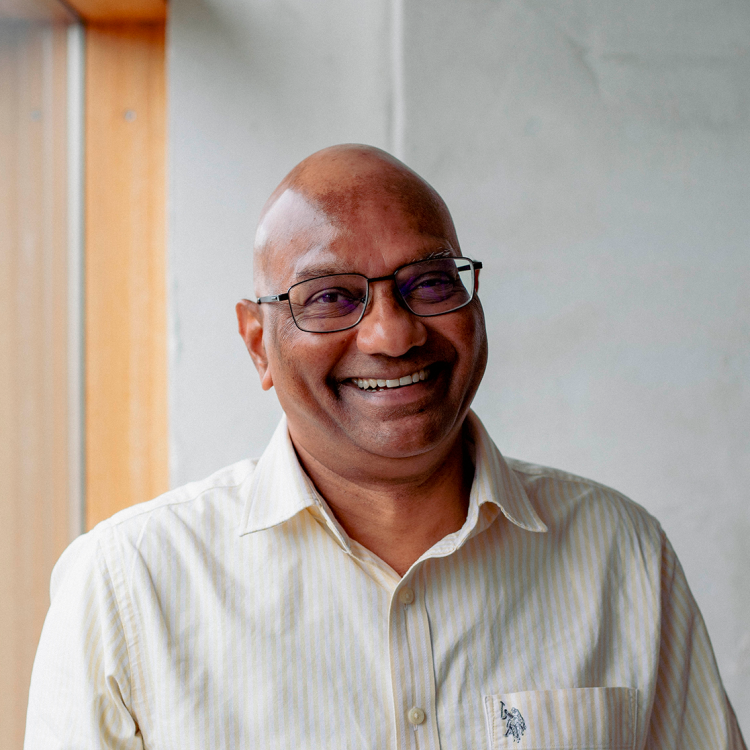
Prof. Raghava Rao Mukkamala
Professor of Data Science and Cybersecurity • Copenhagen Business School, Denmark

Research spans data science, cybersecurity and AI, with a focus on computational methods to analyse social discourse, misinformation, hate speech and online bias. His current work applies fine-tuning and domain adaptation to open-source and small language models, including a pro bono collaboration with UNHCR on identifying hate speech and bias targeting refugees. He has published widely in leading IEEE and ACM venues and in FT-50, AJG 4* and ABDC A* journals. PhD in Theoretical Computer Science and M.Sc. in Information Technology, IT University of Copenhagen.
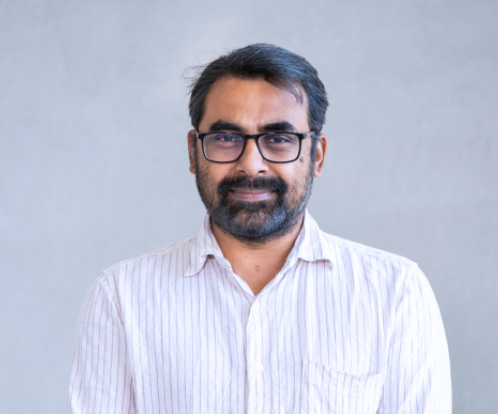
Dr. Shivshanker Singh Patel
Associate Professor, Decision Sciences, IIM Visakhapatnam • Chair/Head, IDeAL

Holds a Ph.D. in Management Science from the Indian Institute of Science (IISc), Bangalore, an M.Tech. in Mechanical Engineering from the Indian Institute of Technology (IIT) Roorkee, and a B.E. in Mechanical Engineering from Government Engineering College (now NIT), Raipur. He has previously worked as a Manager at Mphasis-NextLabs in the field of data science and as an R&D Engineer with Mahindra & Mahindra Automotive. Before joining IIM Visakhapatnam, he served as an Assistant Professor at the Institute of Rural Management, Anand. His research interests include system modeling and analysis, machine learning, game theory, optimization, and forecasting, with a focus on applications in scarce resource management, health care and public policy. He currently heads the Interdisciplinary Decision Sciences & Analytics Lab (IDeAL).

INDIAN INSTITUTE OF MANAGEMENT VISAKHAPATNAM
Research Seminar & FDP Course • Leveraging AI for Research and Teaching • 13–15 October 2026